
Search the website

24th February 2026
With concept threatening to overshadow text, modern-dress Shakespeare can feel like a risky move, but Nikhil Vyas’ Othello proved how powerful reinterpretation can be when grown organically from the text itself. Relocating the drama to the polished, high-stakes world of corporate finance felt surprisingly seamless, sharpening Shakespeare’s fascination with reputation.
The sleek office setting was instantly recognisable, evoking a culture built on appearances and competition, yet the design never competed with the language. Roderigo’s earnest naivety brought welcome humour, while Cassio’s warmth made his manipulation painfully believable.
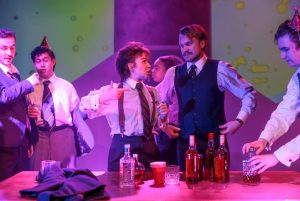
A standout party scene: staged as a messy, cocaine-fuelled office celebration (think Industry Christmas Party), translated Shakespeare’s drunken disorder into something sharply contemporary, without feeling forced.
Iago, played by Charlotte Edwards, delightfully reimagined as a queer Scottish woman was a thrilling presence: playful, conspiratorial, and sharply intelligent. Direct address drew the audience into complicity, making her cruelty feel uncomfortably close. By reframing outsider status through gender and workplace hierarchy, the production preserved the play’s core tensions while giving them a modern twist.
At the centre stood Osi Samuel as Othello himself, beginning as composed and authoritative before gradually unravelling. His descent into madness was thrilling to watch, and by the final scene the tragedy landed with real emotional weight: Desdemona’s death, followed by Ruby Decent’s remarkable performance as Emilia, left me with a lump in my throat.
If Othello examined control, The Tempest offered its playful counterpart. Opening with an inventive storm sequence, the production embraced colour, humour, and theatrical imagination. Graffiti-marked scenery grounded the island in a subtly Bristolian landscape, while Caliban, brilliantly performed by Raf Goold, balanced comedy with vulnerability, feeling both outsider and victim, rather than monster.

Comedy flourished through Stephano and Trinculo, an instantly delightful double act whose energy never distracted from the play but instead highlighted the absurdities of power. The decision to frame Prospero as a mother rather than a patriarch shifted the emotional focus away from power and towards care and release. Presented together, the productions formed a satisfying conversation: one play showing the damage caused by control, the other the freedom found in letting it go.
I’ll admit I’m not an expert in acting or theatre theory – but everything felt clear, engaging, and completely absorbing. I loved it. Such things as dreams are made on!
Check out the FREESHEET for Othello and The Tempest below: